A very warm welcome to this meeting place for citizens, activists and politicians to develop the ‘green’ thinking that just might create the futures that our local communities really need.
You know we are late to this meeting. ‘Big Oil’ has been to talking with governments behind closed doors for decades, seeking to maintain its influence at the core of our globalised society. All the while, in public, all the business ‘influencers’ promote the view- and it is a Big Lie– that the best thing that all we citizens must do in the interests of a healthy environment is, first and foremost, take personal responsibility for our own impact on the planet. My carbon footprint, my recycling, my transport choices, my consumption. This leaves big business, and the consumerist economic project, still driven by fossil fuels at their core, all very much in charge – in charge of us, in charge of the planet and actually keeping complete control of our collective future.
My personal influence and responsibility are important- of course they are. But not the most important thing! No, that is a lie. The best thing we can do is organise. It’s not really about me, or you, but us. And that means leadership. You can be a leader, and the fact that you are reading this probably means you already are one. Yet our lives are different, and we are too busy, and life is complicated. All things considered, most of us are just about managing. I can possibly step up to lead in one area of life, perhaps with some likeminded people, but no single group can bring about the system change we really need- and certainly not quickly enough. We need to help one another. We need systems for effective cooperation, to divide the Big Task into smaller tasks, and those smaller tasks into bite size chunks. Each of us doing what we are best at, and what is closest to our circumstances. And with coordination and cooperation. Though in today’s society, that is a huge challenge. We don’t know our neighbours, our work colleagues come and go, and we don’t even watch the same TV any more.
So how do we lead, and yet coordinate across our differences? This is where the concept of the guild comes in. Over at least the last 1000 years or so, across Europe and beyond, there were guilds of working business people who had agreed a way to organise themselves, both to support one another, and also to combine their rather different interests. I suggest this can be a model for the sort of cooperation that we are going to need to transform our economy- and how we do everything else- into ways of thriving that stewards our planet rather than exploits it. The guilds were professional associations of a variety of people, with different skills and roles, in a larger project of creativity, and I think this model holds promise for our mission.
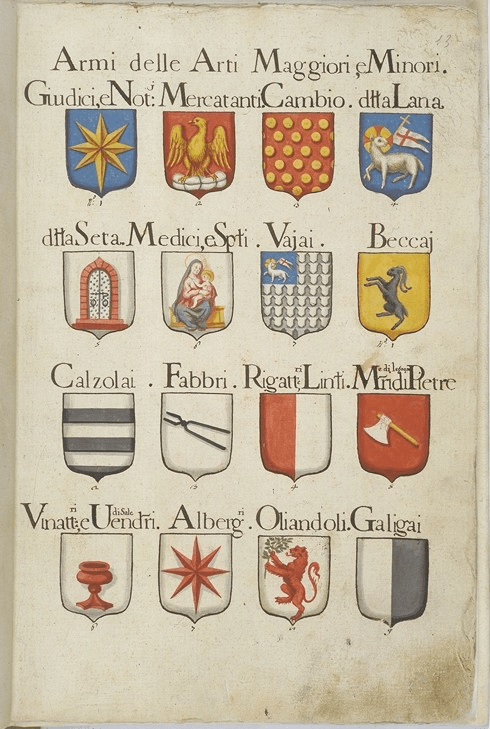
No metaphor should be stretched too far, but the guild model is useful because it combines the interests of the business owner with those of the workers. And represents them, because the roles overlap. In the best version, the owners are also the skilled workers, and the workers are the owners- because people were the machines. Guilds also gave a point of formal contact with the authorities in a place, perhaps through letters patent, taxation and trade agreements. Thus there is also accountability to the customer, who likely has more confidence in the professionalism of the service and the reliability of the product they are paying for.
There was no single pattern for this cooperation, but the point is this. Those that process wool or cotton by spinning into yarn depend on the farmers- who live and work by the seasons, and can sell to anyone. But then the crop must be committed to yarn and spun to thread, which must be passed to those who weave it into fabric, and then those who fashion fabric into a textile product. Somewhere there will be dying and fixing colour to the yarn, thread or cloth. All these tasks may have been assisted by tools of some simple form or other, but really the machine is the man or woman or child who learns to perform the role, right up to the modern era. There are both economies and guarantees that can result from planning, cooperation and negotiation in what is a complex and dynamic sequence- a grand production line, if you like, of very different labours, skills and enterprises. It makes no sense for one to attempt to do it all- the various skills required are too subtle and demanding of investment. But without coordination, the chain is vulnerable to exploitation or collapse.
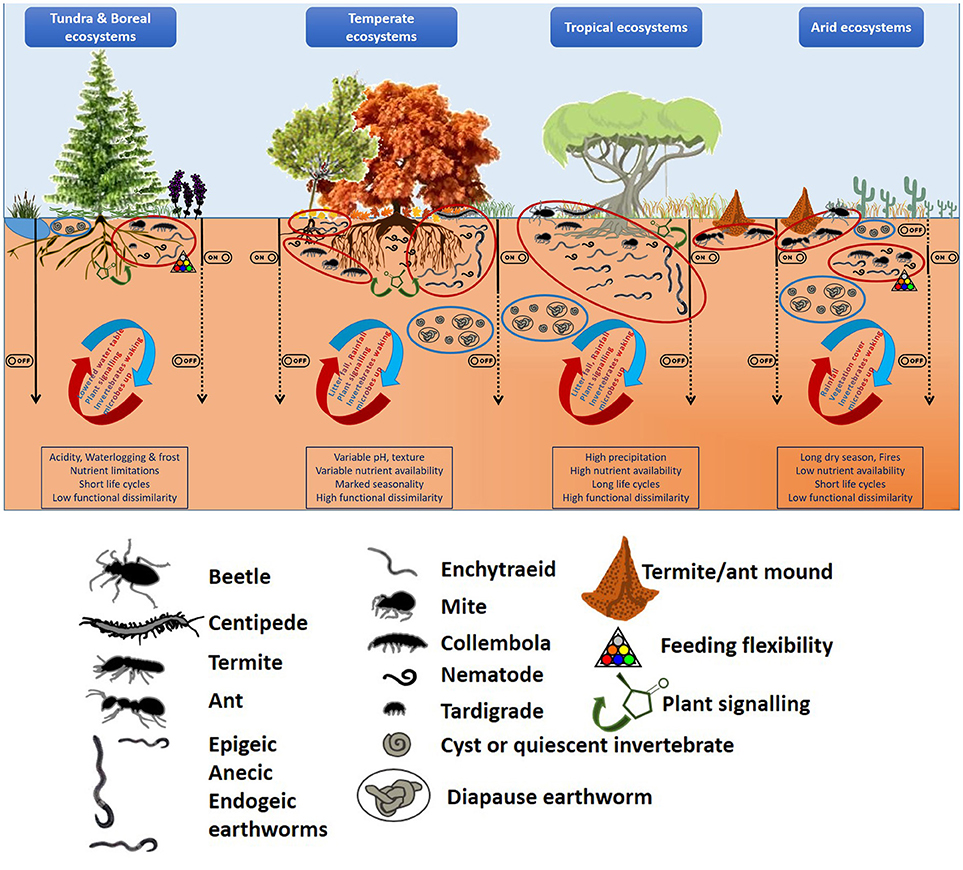
Ecologists have coined the same term, the guild, to the organisms that live and feed themselves in a particular habitat. In certain places, such as in the stony particle rich base of a freshwater stream, a community of widely dissimilar organisms, some of which most folk have never heard of, feed from the same food sources but in different ways, eating things that the others don’t, leaving bits and pieces that others do eat, and so they collectively clean up. The same sort of thing happens in the soil on dry land, and in certain circumstances particular advantages result. As the diagram below demonstrates, in certain circumstances, in particular conditions of climate and so on, very different sorts of organisms help one another to thrive.
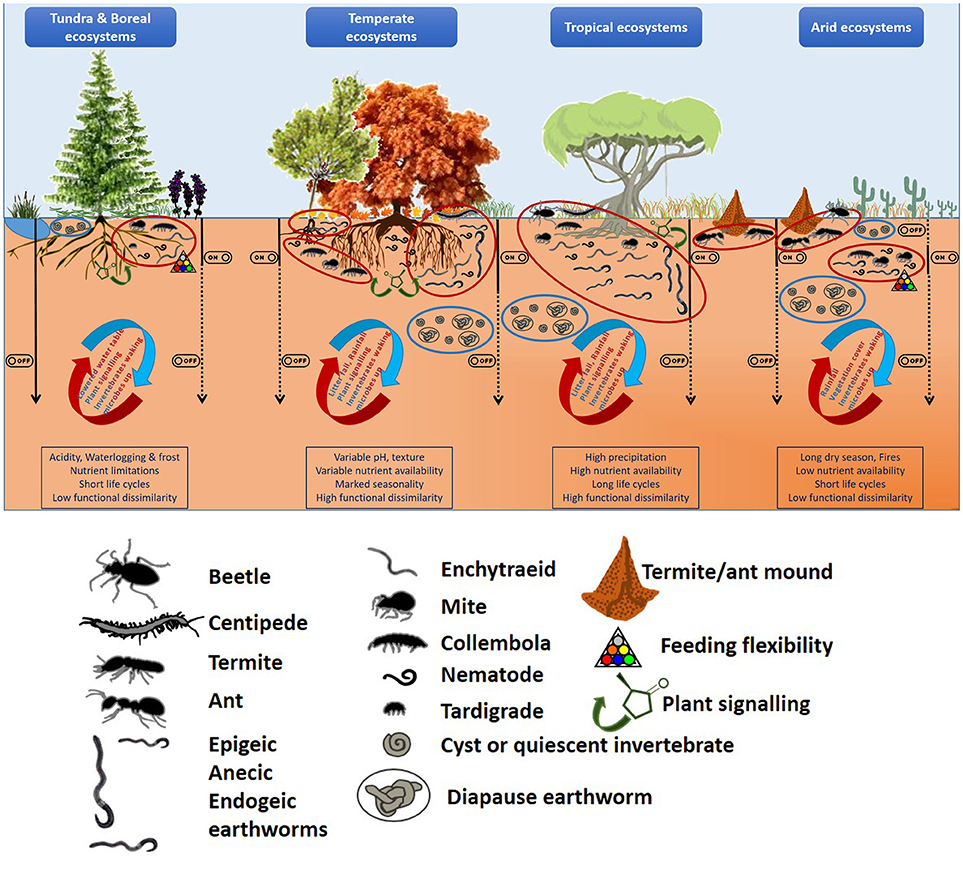
The human business situation is equivalent to these examples- except in our case, the cooperation is deliberate and intentional. Woodlice and worms, nematodes, collembola, tardigrades and so on- these organisms don’t feed on one another, but their presence can confer ‘unexpected’ advantages in the community, as indicated by the rings and cycles in the diagrams above. And these advantages are different in different places- more ‘unexpected’ outcomes!
We now face progressively challenging circumstances, and across our regions and countries, and beyond to the various continents on which we have spread by the billions, we are now challenged to imitate Nature, on which we discover again that we so acutely depend. If we seek to survive alone, our collective disaster is certain. It may not be too late, if we will learn to assist one another – both to lead and be led, to steward this singular earth and to learn from all.
This is the subject of the Green Leadership Guild.
 Green Leadership Guild